
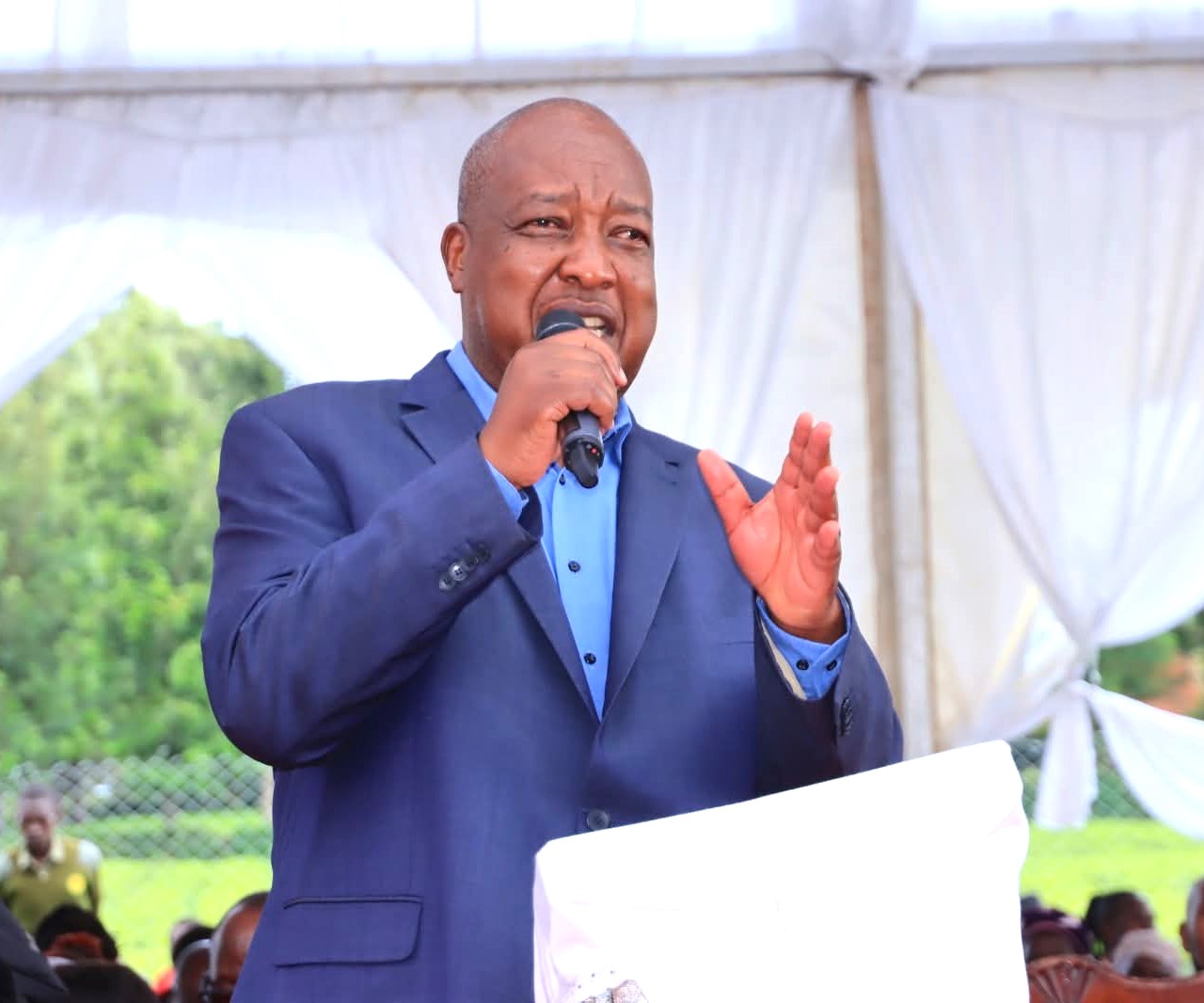
Registrar of Political Parties John Cox Lorionokou explains the legal framework governing political party membership and the consequences for elected leaders who switch parties.
He emphasized that while members can freely leave parties, elected officials risk losing their seats if they abandon the party under whose ticket they were elected.
Speaking on on Tuesday, Lorionokou likened his role to that of a referee in a sports match.
“When you are a referee, you are not in charge of who the team decides to be their captain,” he said, “but the moment they step into the field, they have to identify who the captain is.”
He pointed out that while public discourse often highlights multiple leaders claiming authority within a party or coalition, the people who are legally recognized as leaders by the party and coalition structures are the ones who hold official standing.
“You cannot run on a political party’s ticket if you are not a member of that political party,” he emphasized. Furthermore, “you cannot be a member of two coalitions. You can only belong to one coalition at one time.”
This comes shortly as Kenya’s political scene remains fluid as some leaders associated with the Orange Democratic Movement (ODM) embrace collaborations with President William Ruto’s ruling United Democratic Alliance (UDA), even while the party’s core leadership insists it remains formally aligned to the Azimio la Umoja One Kenya Coalition.
The broad‑based government arrangement, anchored in a memorandum of understanding (MoU) signed in March 2025 between the late former Prime Minister Raila Odinga and President Ruto was initially crafted to deliver a 10‑point national agenda and stabilise the country.
Odinga’s inclusion of ODM within this framework drew mixed reactions within his party and wider Azimio alliance.
Some ODM members publicly endorsed closer cooperation with the government, arguing that it allows the party to influence policy and deliver benefits to its constituency.
National Assembly Minority Leader Junet Mohamed, for example, said the broad‑based government is deliberate and necessary to safeguard national stability, and stressed that only Raila Odinga could have determined the fate of the MoU.
However, longstanding tensions emerged over how ODM should approach its political future, particularly with the 2027 general election looming.
Speaking recently on Citizen TV, ODM Secretary‑General Edwin Sifuna clarified the party’s stance, saying the broad‑based government was not born of the NADCO report and was not ODM’s original plan.
He emphasised that ODM has not decided whether to support President Ruto’s re‑election and remains open to engaging multiple political formations.
The ODM SG described the broad‑based arrangement as a response to national exigencies, aimed at sustaining democratic processes without extra‑constitutional measures.
He reiterated that ODM continues to weigh its own presidential options for 2027 rather than committing to a pre‑election pact with UDA.
Recent internal disputes have highlighted this fault line. Some party officials, critical of Sifuna’s position, have called on him to align more closely with the broad‑based government pact.
Despite these divisions, Sifuna has maintained that ODM remains part of Azimio coalition and that formal withdrawal from a coalition would require a constitutional process within the party.
Lorionokou explained that the legal provisions under the Political Parties Act provide a process called “deemed movement,” which occurs when a member is considered to have left a party by aligning with another.
However, the Registrar does not unilaterally decide on such movements. Instead, the party itself must initiate proceedings by formally informing the Registrar that a member no longer serves their interests, providing written evidence of how the member has violated party rules.
“Have you followed your own rules of how to speak to your members when they do something like that?” he questioned.
“We want parties to function independently and handle their own internal disputes, including through dispute resolution committees.”
Lorionokou stressed that the ultimate decision on the status of an individual rests with the party. “The power of determining what happens to an individual rests with the party. It is the party that should write to us.”
On the matter of elected officials, such as governors or members of parliament, he said the rules are more stringent.
“When you become a leader, an official, an elected member, it takes a process,” he explained. Such officials hold positions that require accountability beyond mere membership, and their parties must follow due process to remove them.
For example, he said, if a governor elected on Party A decides to deregister from Party A and join Party F, “you can still contest in a different ticket in the next election, but you cannot change your ticket in the middle of the term.” This means that if you decide you no longer want to stay here, you have to forfeit everything.
The Registrar likened party membership to a marriage, “You start in it, you can’t divorce easily, but when the time comes, you can change houses.” He explained that the divorce is a process, requiring willingness to face consequences.
He acknowledged that some members may be dissatisfied with their parties but emphasized the responsibility of party members to work within their parties to resolve issues. “You cannot just run away from it. You have to rise up to it.”
Regarding recent cases where party leaders have registered to run under different parties, Lorionokou reiterated, “You cannot run on a political party’s ticket if you are not a member of that political party.”
He added that coalition membership, too, is exclusive, stating, “You cannot be a member of two coalitions. You can only belong to one coalition at one time.”
On coalitions more broadly, he described them as a solution to a Kenyan political problem, introduced to manage the increasingly complex political landscape.
“Initially, it was not part of the Act, but our political environment became so demanding that we had to find a way to regulate it.”
He noted that while the coalition framework was initially designed to provide a management structure, it now requires refinement to be more structured and maybe more elaborate.
The Registrar also highlighted the importance of having party constitutions that clearly outline mechanisms for handling members who stray or shift loyalties, ensuring smooth dispute resolution without resorting to external interference.
In conclusion, John Cox Lorionokou’s remarks clarify that political party membership rules in Kenya are designed to maintain party cohesion and accountability, especially for elected officials who must honor the ticket that brought them into office or risk losing their seats.






























Comments
Sign in with Google to comment, reply, and like comments.
Continue with Google